In almost every project I photograph for an architect, there is a contractor, interior designer, developer, and other project partners that often need photographs of the same project as well. If each individual party were to hire a photographer to photograph these projects, they would all be paying thousands of dollars. Cost sharing architectural photography works by allowing those companies to participate in the shoot together, reduce their individual costs, and receive licensing according to their own usage/marketing needs.
In the previous two articles I discussed the production costs and licensing costs of architectural photography. In this article, I will show you how to cost share your projects with other parties and will break this subject down into a bit more detail and show you REAL numbers so that you can truly understand the benefits of cost sharing for your next architectural photography shoot beyond just saving a significant amount of money.
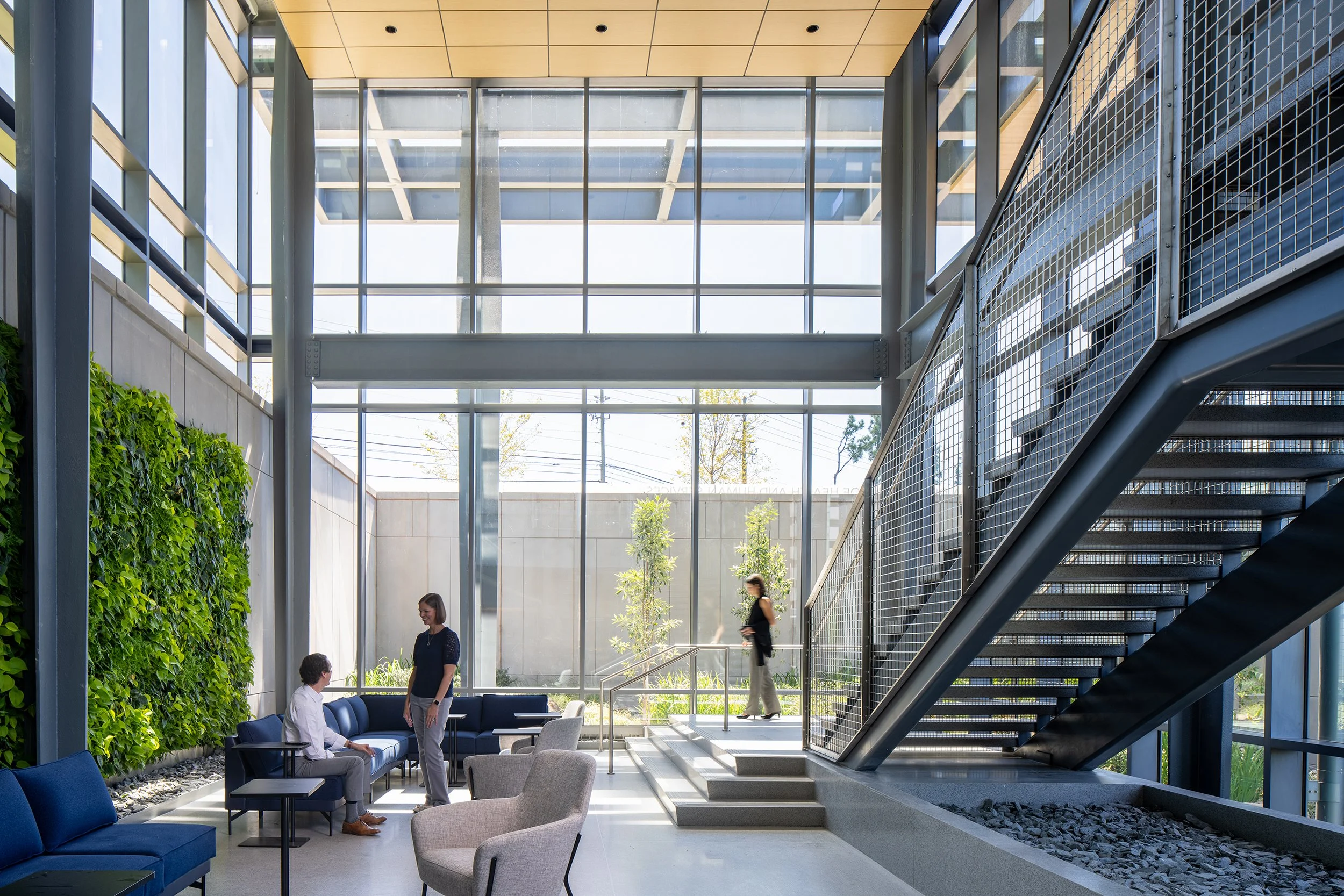
Double-Height Atrium with Living Wall at the DHHS campus in Raleigh, NC for LS3P. Looking at this image, how many parties would have benefitted from having this photo aside from just the architecture firm?
A finished building can represent the work of everyone from the architect to the lighting and window manufacturer, furniture dealers, steel fabricators, landscape architects, interior designers, millwork, etc. The list is often incredibly large relative to the size of the project. Because of this, one of the FIRST questions I will ask a client who has a new shoot “who else would want to use these images in their business?”.
When a project is complete and ready to be photographed, you may not be thinking about all of these other parties involved - you are likely just thinking that “we need to get this shot asap!”. If other parties are considered, it is typically just the GS, Interior Designer and Architects who are considered, but not other parties. The thing is, several of these other companies also need professional photography, even if they’re not actively looking for it. The more parties who participate in the cost share up front, the more everyone involved wins.
COST SHARING PRIOR TO THE SHOOT VS. LICENSING IMAGES AFTER THE SHOOT
There's an important distinction between participating in the original production and licensing photographs after they've already been created. The company’s who participate upfront - before the photography even begins is essentially funding the cost of the photo shoot itself.
They're committing before they've seen the finished photographs, participating in the creation them and, to some extent, assuming the risk inherent in producing new work. In other words, they have no idea how the photos are going to turn out - whereas someone licensing an existing photograph six months later is in a very different position because they see the result and assumed zero risk and contributed zero energy and resources toward the photo shoot itself.
They're essentially shopping from a finished catalog. That's why my licensing for clients participating in the original shoot can be substantially less expensive than licensing existing images afterward.
EACH COMPANY MAY HAVE DIFFERENT NEEDS
Cost sharing doesn't mean everyone has to purchase exactly the same license.
I typically start with 10 images and standard usage because that works well for most architects, designers, and builders. From there, each company's invoice can be adjusted according to its needs.
For example, the architect and builder may need only standard website, portfolio, and social-media usage whereas the interior designer is planning to get the images published in a nationally syndicated home magazine and needs additional rights for editorial usage and an extra 5 images. The line items and discounts on all 3 parties invoice will look the same, except the interior designer may see a line items for the 5 extra images as well as the editorial usage license fee which can range anywhere from $200-$1000+ (rare) depending on the publication/distribution and other factors which is pretty standard across the industry.
In any case, each can participate in the same production without paying for rights they don't need and the parties who need the additional usage can pay for those on their own while still befitting from the cost-savings of the shoot.
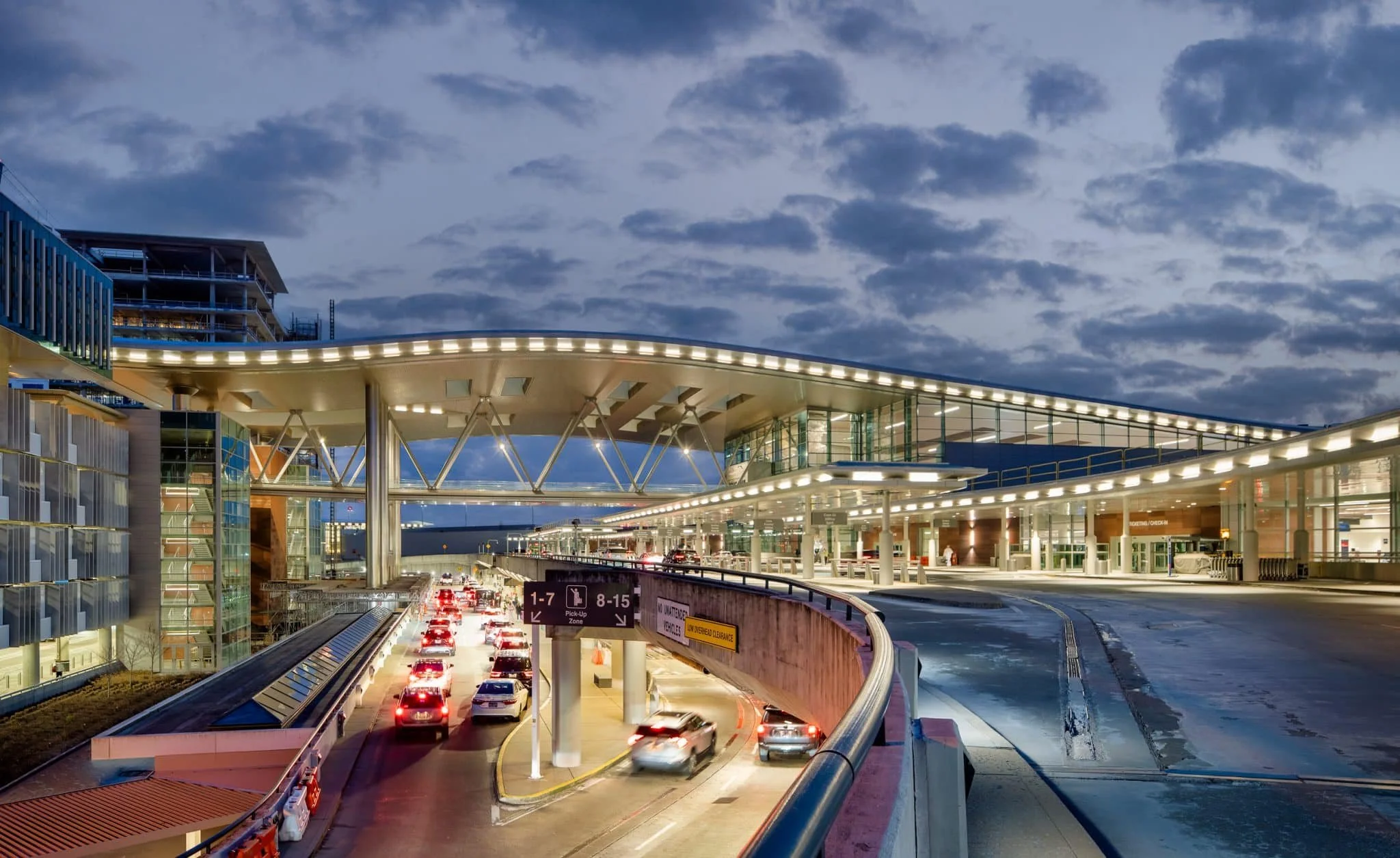
This BNA Nashville airport terminal photo is one of my most widely-used images across multiple parties. It has won awards for the steel fabricator who commissioned the image, but has also benefited the engineering firm, and many other parties.
ARCHITECTURAL PHOTOGRAPHY COST-SHARING + LICENSING PRICING
With this process, each party is purchasing their OWN usage licensing for the images for 30% of the cost of the shoot. So, for example, if a shoot is $3000 for one party and a 3rd party joins in on the cost share, the $3000 isn’t just split 50/50 because there is only one license. In this specific example, adding an additional license would be only 30% vs. 100% - so the two parties would actually be splitting $3900 vs $3000. I know that may be challenging to calculate so below is a calculator I developed for you to play around with to see how adding additional parties SIGNIFICANTLY reduces the cost of a photo shoot. You can review other variables as well if you have a shoot coming up and you want to see how much it may cost to hire me. Please keep in mind - this is NOT necessarily what I would charge for my shoots as I mentioned in the previous post, there are too many variables and you should contact me to discuss your specific project needs.